
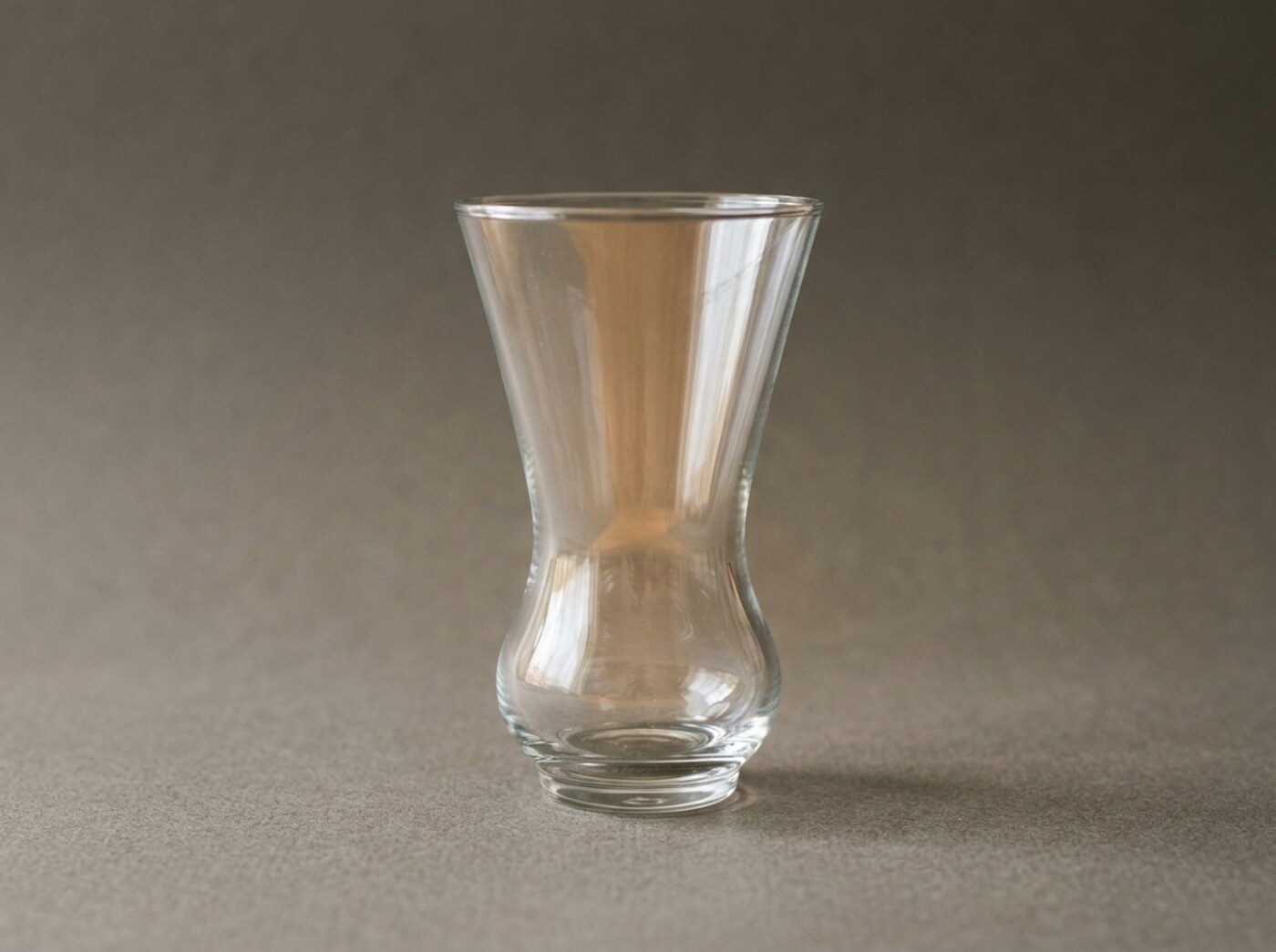
Tulipa Classic — 125 cc
The reference ince belli. 125 cc nominal, 142 cc brim-full, 88 mm tall. Tempered for the foodservice line, annealed for retail. 48 pieces to a partitioned master carton.

Ince belli · Türkiye
The Turkish tea glass is refilled, not sipped once. Everything below follows from that: the rim you drink from twenty times a day, the waist you hold without a handle, the wall that survives a commercial dishwasher.
1.9 mm wall
Press-blown in one tulip mould so the waist repeats run to run. The rim is fire-polished in a separate pass — a cut edge chips in a dishwasher rack, a reflowed one does not.
42 K thermal shock
The foodservice line is tempered after annealing. A 65 °C wash into an 85 °C rinse is the load that breaks glasses in service; we clear it with 12 K to spare.
01 — Rim
58 mm at the rim, fire-polished in a separate pass. A rolled or ground rim chips in a commercial dishwasher rack; a fire-polished one does not, and it is the first thing a buyer runs a thumb over.
02 — Waist
The waist sits at 34% of the height. It is not decoration: it is where the hand grips a glass that has no handle and holds tea at 90 °C. Move it up and the glass becomes a vase; move it down and it burns fingers.
03 — Base
36 mm base, 92 g finished weight. Heavy enough that a full glass does not walk on a moving tray, light enough that 48 of them in a carton stay under the handling limit.
02
Product range
Every item below comes off the same mould family and the same batch. A buyer chooses on volume, on whether the glass needs a handle, and on whether it ships as a case or as a retail box.
The reference ince belli. 125 cc nominal, 142 cc brim-full, 88 mm tall. Tempered for the foodservice line, annealed for retail. 48 pieces to a partitioned master carton.
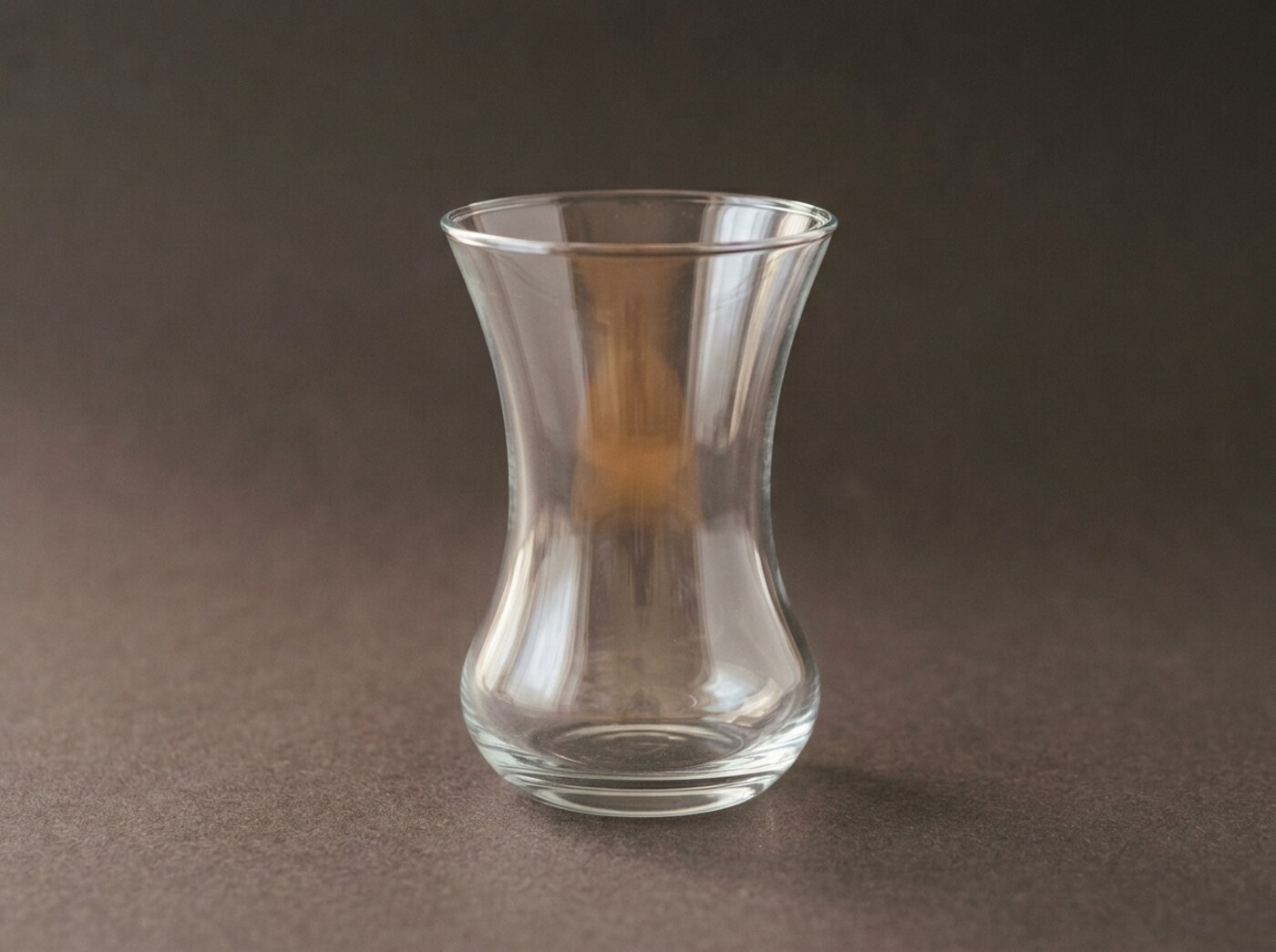
The larger pour European cafés ask for. Same waist ratio scaled up: 97 mm tall, 64 mm rim, 108 g. Fits standard 12 cm saucers without overhang.
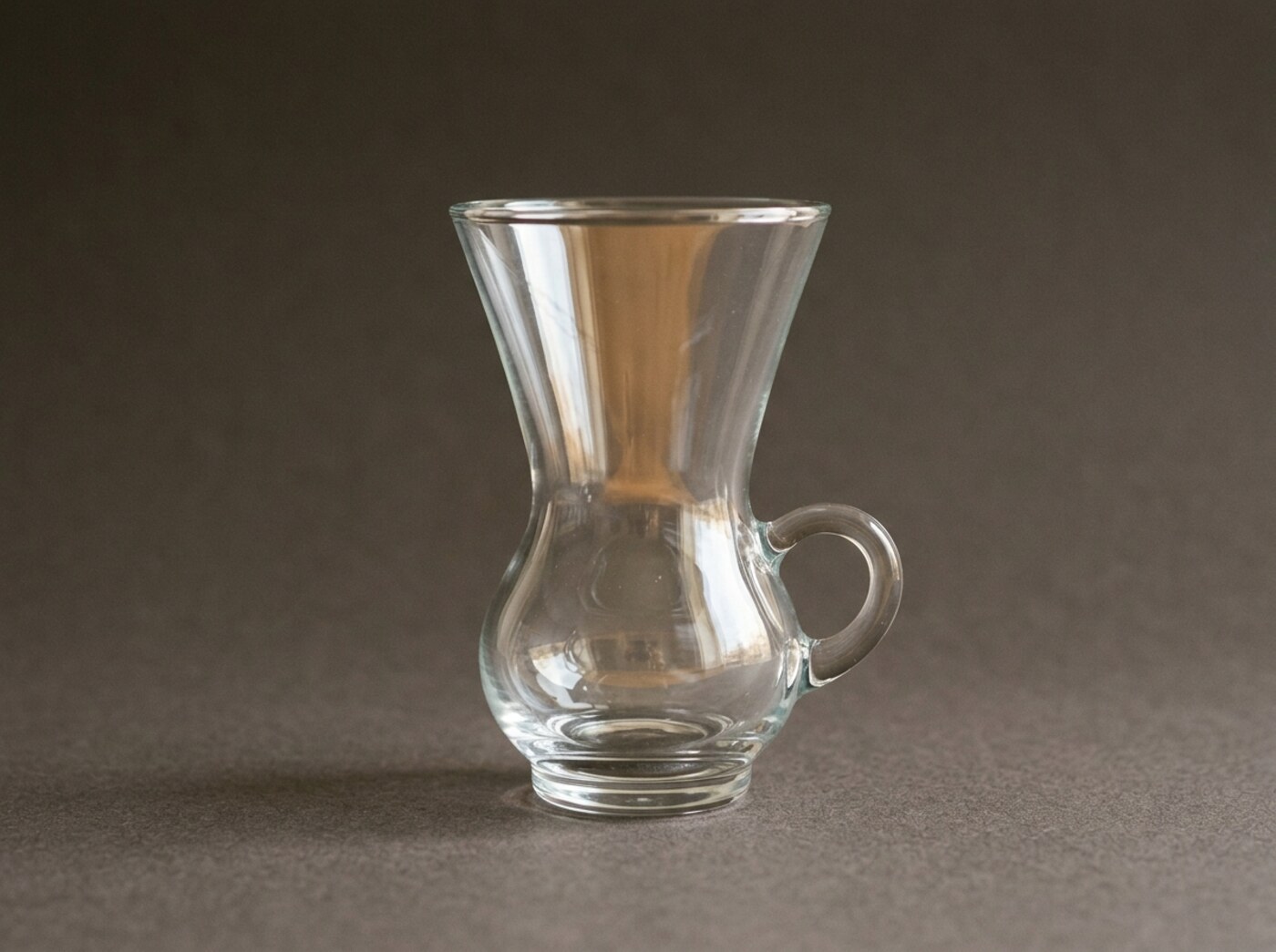
Applied handle, annealed at the joint in the same lehr pass so the handle and body cool together. Specified where staff serve at pace and burn risk drives the purchase.
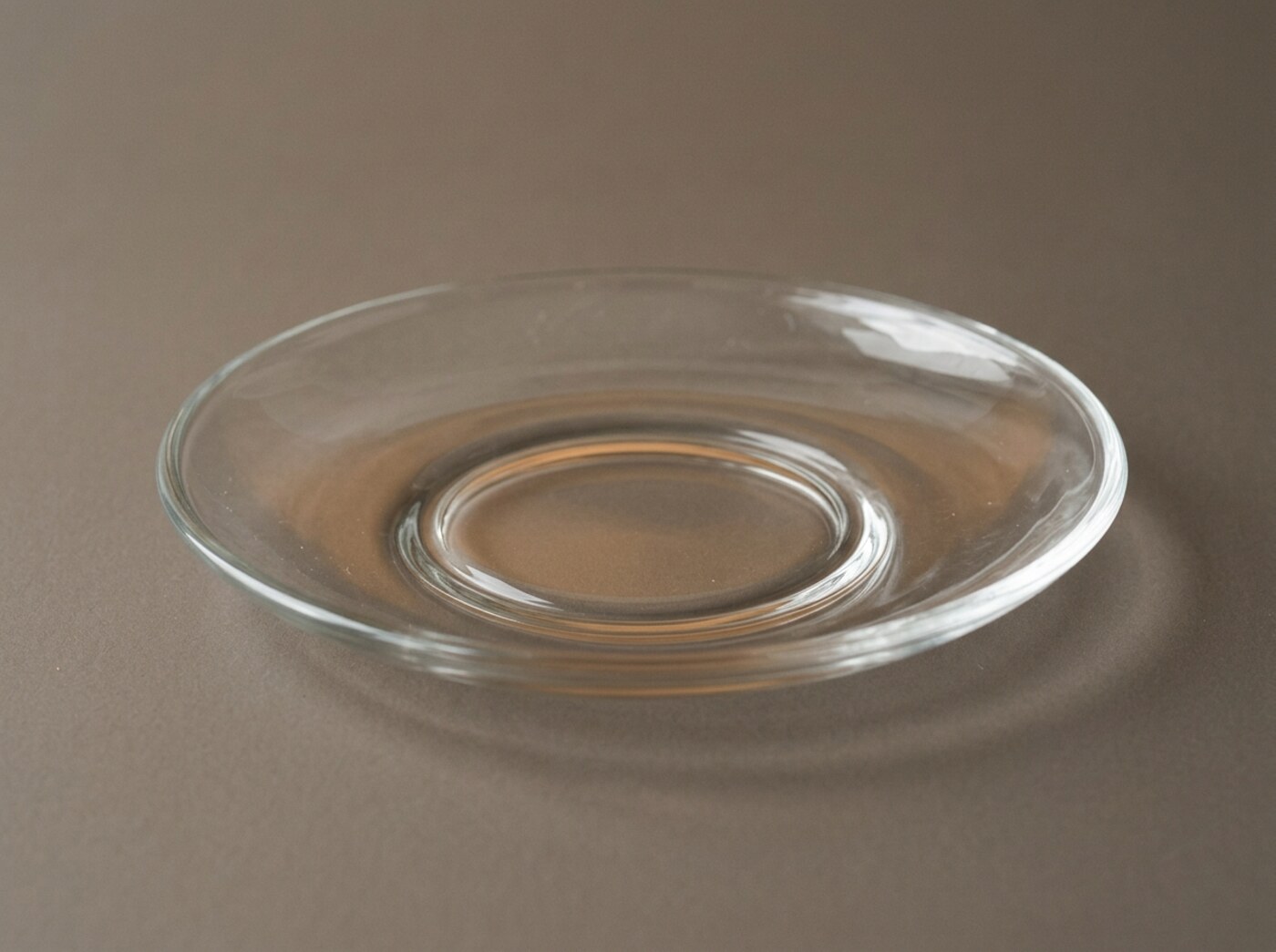
12 cm pressed saucer with a 40 mm seat ring that holds the Classic and the Grande without rattle. Stacks 20 high on a shelf.
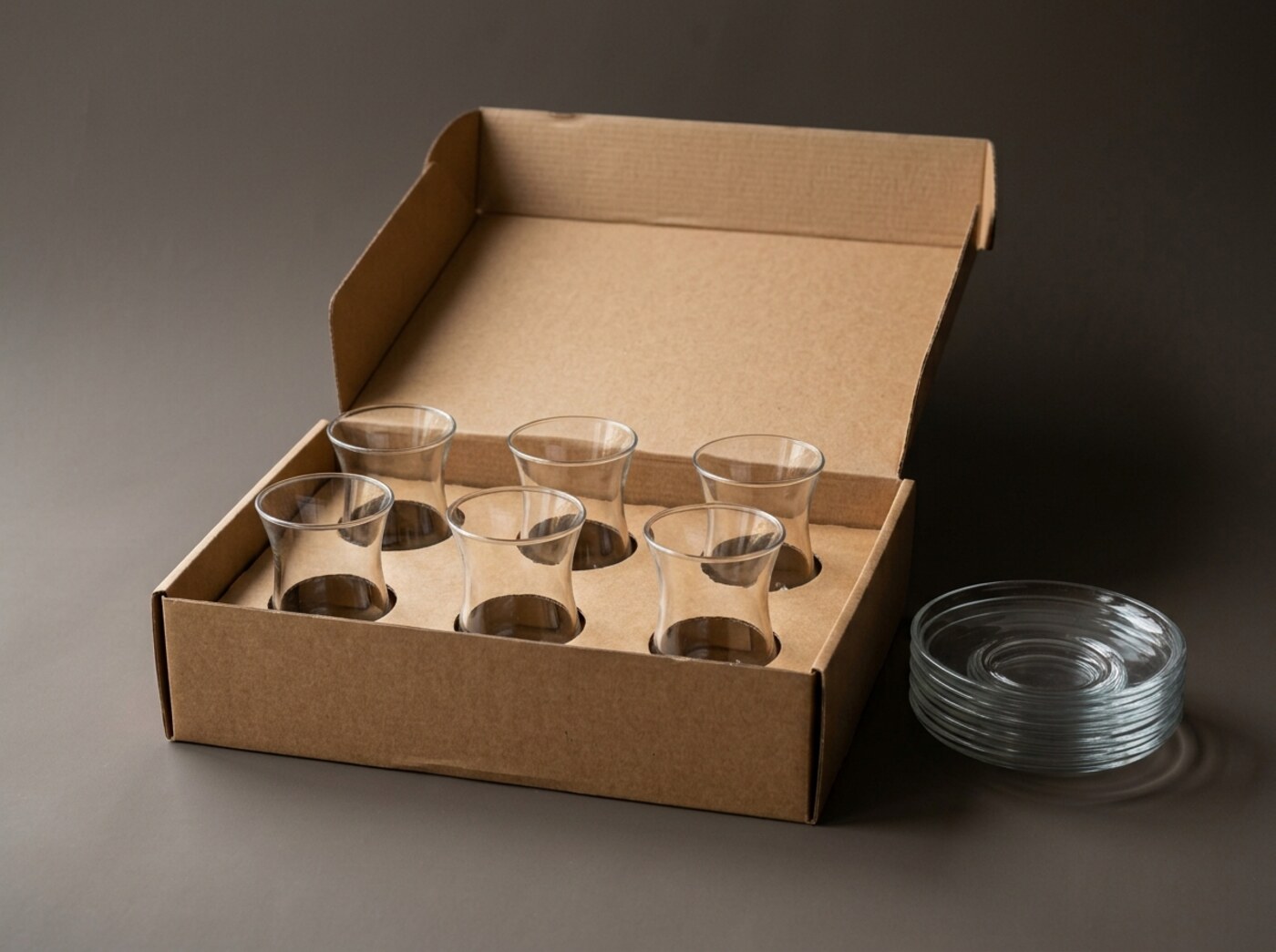
Six Classic glasses and six saucers in a printed box with die-cut inserts, barcoded per box. Built for shelf: the box opens flat and the glasses face front.
01
Technical data
Dimensional values are from the current mould and carry the tolerance we hold, not the tolerance we are allowed. Migration values come from an accredited laboratory report issued against EN 1388-2.
| Parameter | Unit | Tulipa Classic | Limit / method |
|---|---|---|---|
| Nominal capacity | cc | 125 | ± 5 % |
| Brim-full capacity | cc | 142 | declared |
| Height | mm | 88 | ± 1.5 |
| Rim diameter | mm | 58 | ± 1.0 |
| Base diameter | mm | 36 | ± 1.0 |
| Wall thickness | mm | 1.9 | ≥ 1.6 held |
| Finished weight | g | 92 | ± 5 |
Values are from the most recent production run and the laboratory report that accompanies it. A Declaration of Compliance under Regulation (EC) 1935/2004 is issued per shipment and names the batch it covers.
Full technical page (+7) →06
Compliance
Glassware is bought on food-contact compliance, not on a quality-system logo. The Declaration of Compliance and the migration report are the two documents that decide whether a container clears; everything else is supporting.
Framework FCM regulation — Declaration of Compliance issued per shipment
Lead and cadmium migration limits the glass industry applies
Test method behind the migration figures: 4 % acetic acid, 22 °C, 24 h
German food-contact requirement, tested for buyers who ask
US food-contact compliance for North American shipments
Quality management system covering the plant
02
Catalogue
The catalogue carries the same numbers you see here, in a form your procurement team can attach to an approval request without rewriting anything.
OEM decoration, custom capacities and private-label boxes are quoted separately — send the artwork and the annual volume and we will come back with a mould and unit cost.
Contact
Send the item, the quantity and the port. We answer with price, carton plan and lead time — usually the same working day.